What is intellectual property software? A 2026 guide

Intellectual property software is a category of specialised digital tools designed to secure, monitor, and manage intellectual property rights across legal, technical, and commercial dimensions. Whether you are an independent inventor protecting a novel algorithm, a startup founder safeguarding your brand, or a business owner managing a growing patent portfolio, understanding these tools is the first step toward protecting what you build. IP management systems (IPMS) and legal protection tools together form the backbone of modern IP strategy, covering everything from copyright registration to multi-jurisdictional patent filings. Platforms like iPNOTE now integrate AI and data from 190+ countries to automate what once required entire legal departments.
What is intellectual property software and how does it work?
Intellectual property software refers to two distinct but complementary categories: legal IP protections and IP management systems that support the full lifecycle of IP assets across jurisdictions. Legal protections include copyrights, patents, and trade secrets. IPMS platforms are the operational layer that keeps those protections alive, organised, and enforceable.
IPMS platforms manage the entire IP portfolio lifecycle, from initial filing through renewal, expiry, and monetisation. Core capabilities typically include:
- Automated docketing: Tracks filing deadlines and renewal dates across multiple jurisdictions without manual calendar entries.
- Document management: Centralises patent applications, licences, correspondence, and legal opinions in one searchable repository.
- Financial and royalty tracking: Connects IP assets to revenue streams, licensing agreements, and cost centres.
- Patent office integrations: Syncs verified data from USPTO, EPO, and Espacenet to eliminate manual cross-checks.
- Workflow automation: Routes tasks between legal, R&D, and business teams with audit trails.
IPMS platforms assist organisations in managing IP across 180+ jurisdictions, which means a single missed renewal in one country no longer requires a dedicated paralegal to catch. The administrative overhead reduction alone justifies adoption for any business with more than a handful of active IP assets.
Pro Tip: Before evaluating any IPMS, list every jurisdiction where you currently hold or plan to file IP rights. Software that covers fewer jurisdictions than your portfolio requires will create gaps that manual processes must fill, which defeats the purpose entirely.

How is software itself protected as intellectual property?
Software occupies a unique position in IP law because it can qualify for protection under four distinct categories simultaneously, and most developers rely on only one. Layered IP protection using copyrights, patents, trade secrets, and trademarks gives software the most defensible position.
| Protection type | What it covers | How it is obtained |
|---|---|---|
| Copyright | Source code, object code, and expressive elements | Automatic at creation under 17 U.S.C. § 102 |
| Patent | Novel technical processes and functional innovations | Filed application; requires novelty and non-obviousness |
| Trade secret | Confidential algorithms, internal methods, proprietary data | Maintained through NDAs, access controls, and confidentiality policies |
| Trademark | Software name, logo, and brand identifiers | Registered with national IP offices |
Copyright attaches automatically the moment you write code, but it only protects the specific expression, not the underlying idea or method. Patent eligibility for software is complex and disputed, shaped by legal precedents such as Alice Corp. v. CLS Bank, which narrowed what counts as a patentable software innovation in the United States.
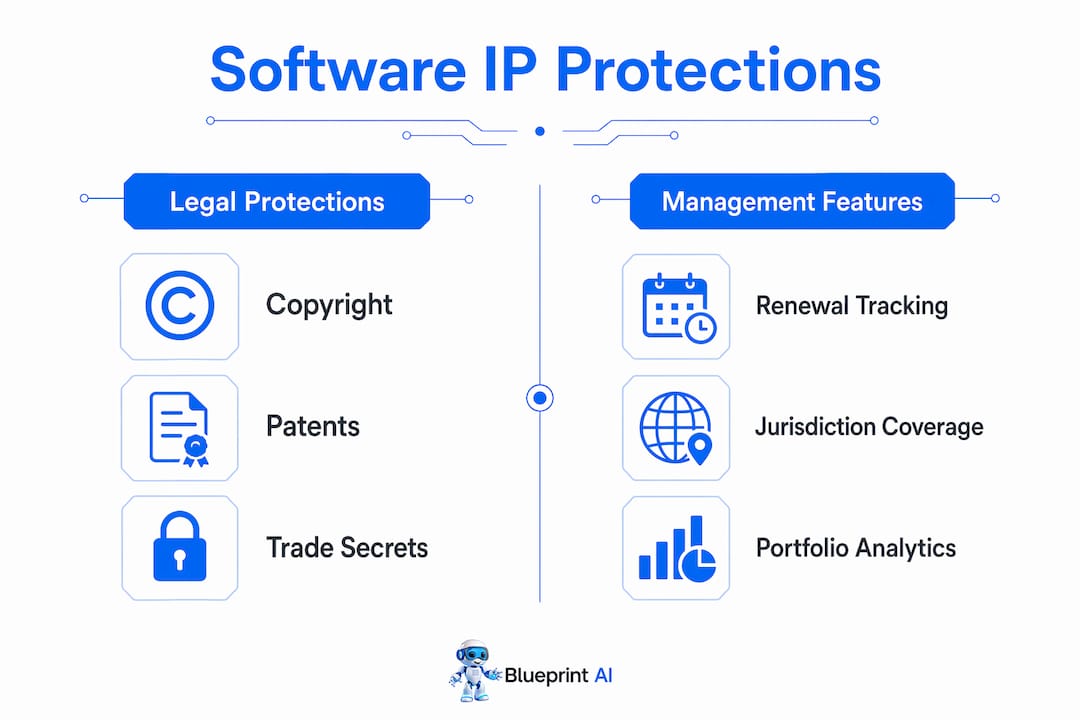
Trade secrets are the most underestimated protection layer. Trade secret status costs nothing to establish but disappears instantly if confidentiality fails. A single unprotected email sharing a proprietary algorithm with a contractor, without a signed NDA, can permanently destroy that protection. The discipline required is ongoing, not a one-time setup.
One critical misconception worth addressing directly: writing code independently does not protect you from patent infringement. Independent code creation does not prevent patent infringement if your implementation uses a patented method or process, even if you arrived at the same solution on your own. This is why understanding the full IP picture matters before you ship.
Pro Tip: Register your copyright formally even though it attaches automatically. In Canada and the United States, formal registration creates a public record and strengthens your position in any infringement dispute.
What features do IP management tools offer?
The best software for IP management goes well beyond a shared calendar with deadline reminders. Modern IPMS platforms function as the operational nerve centre for an entire IP portfolio, connecting legal, financial, and technical data in one place.
Here are the core features that distinguish professional IP software solutions from basic tracking tools:
Automated deadline monitoring: The system pulls renewal and response deadlines directly from patent office data feeds, then sends tiered alerts to the responsible team member. A single data error in manual tracking can cause irrevocable loss of rights, which makes verified automation non-negotiable.
Official patent office synchronisation: Integration with USPTO, EPO, and Espacenet means your portfolio data reflects the actual status of each filing in near real time. Manual cross-checks against multiple national databases are replaced by a single verified feed.
AI-powered monitoring and alerts: Platforms like iPNOTE use AI to scan for potential infringements, monitor competitor filings, and flag relevant prior art. AI-assisted IP platforms significantly cut global IP costs and complexity by automating workflows that previously required specialist staff.
Collaborative workflows: Effective IP teams use platforms that bridge legal, R&D, and business functions rather than siloed tools. When a patent attorney, a product engineer, and a licensing manager can all access the same record with role-appropriate permissions, strategic decisions improve.
Financial and licensing management: The platform tracks royalty income, licence terms, renewal costs, and IP-related expenditures against each asset, giving you a clear picture of which IP is generating value and which is a cost centre.
Document repository: All filings, correspondence, opinions, and agreements are stored centrally with version control, making due diligence for investment rounds or acquisitions far less painful.
iPNOTE, for example, unifies patent, trademark, and design management into one dashboard covering 190+ countries with a flat subscription model, which makes enterprise-grade IP management accessible to smaller teams and individual inventors.
What goes wrong when you manage IP without software?
Managing intellectual property manually is not just inefficient. It is genuinely risky in ways that are difficult to recover from once the damage is done.
The most common failure points include:
- Missed renewal deadlines: Patent and trademark rights lapse if renewal fees are not paid on time. In most jurisdictions, there is a short grace period, but after that the rights are gone permanently. A spreadsheet with no automated alerts is one overlooked email away from a catastrophic lapse.
- Data entry errors: Even small errors in patent numbers, filing dates, or jurisdiction codes can cause missed deadlines and irrevocable loss of IP rights. Manual entry across multiple national databases multiplies the risk.
- Portfolio blind spots: Without a centralised system, it is common for organisations to lose track of which assets are active, which have lapsed, and which are generating licensing revenue. This makes strategic portfolio decisions nearly impossible.
- Coordination failures: When legal counsel, R&D teams, and business development operate from separate tools and email threads, filings get delayed, prior art searches are duplicated, and licensing opportunities are missed.
- Jurisdiction gaps: A patent filed in Canada and the United States but not in the European Union leaves your innovation unprotected in a major market. Without software that maps your coverage against your commercial footprint, these gaps are invisible until a competitor exploits them.
The solution is not simply better organisation. It is replacing manual processes with automated, verified data flows that remove human error from the critical path. Real-time updates from official patent offices, combined with AI-assisted monitoring, give you a defensible portfolio rather than a hopeful one.
How to choose and implement IP software effectively
Selecting the right IP software tools requires matching the platform's capabilities to your specific portfolio, team structure, and growth plans. A solo inventor with two patents has different needs than a mid-size technology company managing 200 filings across 15 jurisdictions.
Define your scope first. List every IP type you hold or plan to file: patents, trademarks, copyrights, trade secrets. Confirm which jurisdictions matter to your business now and in the next three years. Any platform you evaluate must cover this scope without requiring manual workarounds.
Prioritise official data integration. Software that pulls verified data directly from USPTO, EPO, and other national offices is categorically more reliable than software that depends on manual input. This single feature eliminates the most common source of costly errors.
Evaluate AI-powered features critically. AI monitoring for competitor filings and infringement alerts is genuinely useful. AI that generates legal opinions without human review is not. Know the difference before you rely on automated outputs for strategic decisions.
Test collaboration features with your actual team. The most sophisticated platform fails if your patent attorney refuses to use it. Run a pilot with the people who will actually manage filings, not just the person who selected the software.
Plan your data migration carefully. Moving existing IP records into a new system is where most implementations stall. Allocate time to clean and verify your existing data before migration, not after.
Use free trials and accessible entry points. Platforms like iPNOTE offer trial access, and tools like those available through Blueprintbot's free planning tools let you map your software architecture and IP strategy before committing to a full IPMS deployment.
Pro Tip: Ask any IPMS vendor how their system handles a jurisdiction you currently file in that is not among their top 20 markets. The answer will tell you more about the platform's real coverage than any feature list.
Why IP software is reshaping how I think about innovation protection
I have spent years watching founders and inventors treat IP protection as a legal formality rather than a strategic asset. The pattern is consistent: they file a patent, assume the work is done, and then discover two years later that a renewal lapsed, a competitor filed a nearly identical claim in a jurisdiction they ignored, or their trade secret evaporated because a contractor was never asked to sign an NDA.
What IP software actually does, at its best, is force you to treat your intellectual property like a living portfolio rather than a filing cabinet. The shift from reactive to proactive is the real value, not the automation itself. When your system alerts you 90 days before a renewal deadline rather than the day after it lapses, you have time to make a strategic decision: renew, abandon, or licence. That decision space is what separates companies that monetise their IP from those that simply hold it.
I am also watching AI integration change the economics of IP management in ways that matter for individual inventors and small businesses specifically. The cost and complexity that once made professional IPMS platforms inaccessible to anyone outside a large corporation are dropping. A solo inventor in Calgary or a two-person startup in Toronto can now access the same quality of deadline monitoring and competitor surveillance that a Fortune 500 legal department uses. That is a genuine shift in who gets to protect their ideas effectively.
The one thing I would caution against is treating software as a substitute for legal counsel. IP software manages your portfolio. It does not replace the judgement of a patent agent or IP lawyer when you are making a filing decision in a contested technology area. Use the tools to handle the operational complexity, and free up your legal resources for the decisions that actually require expertise.
— Rishi
How Blueprintbot helps you protect and plan your IP
If you are building a software product and trying to understand how your architecture connects to your IP strategy, Blueprintbot is built for exactly that starting point. Blueprintbot transforms app ideas into detailed technical blueprints covering system architecture, API designs, and cost estimates, giving you the documented foundation that supports both development and IP protection.
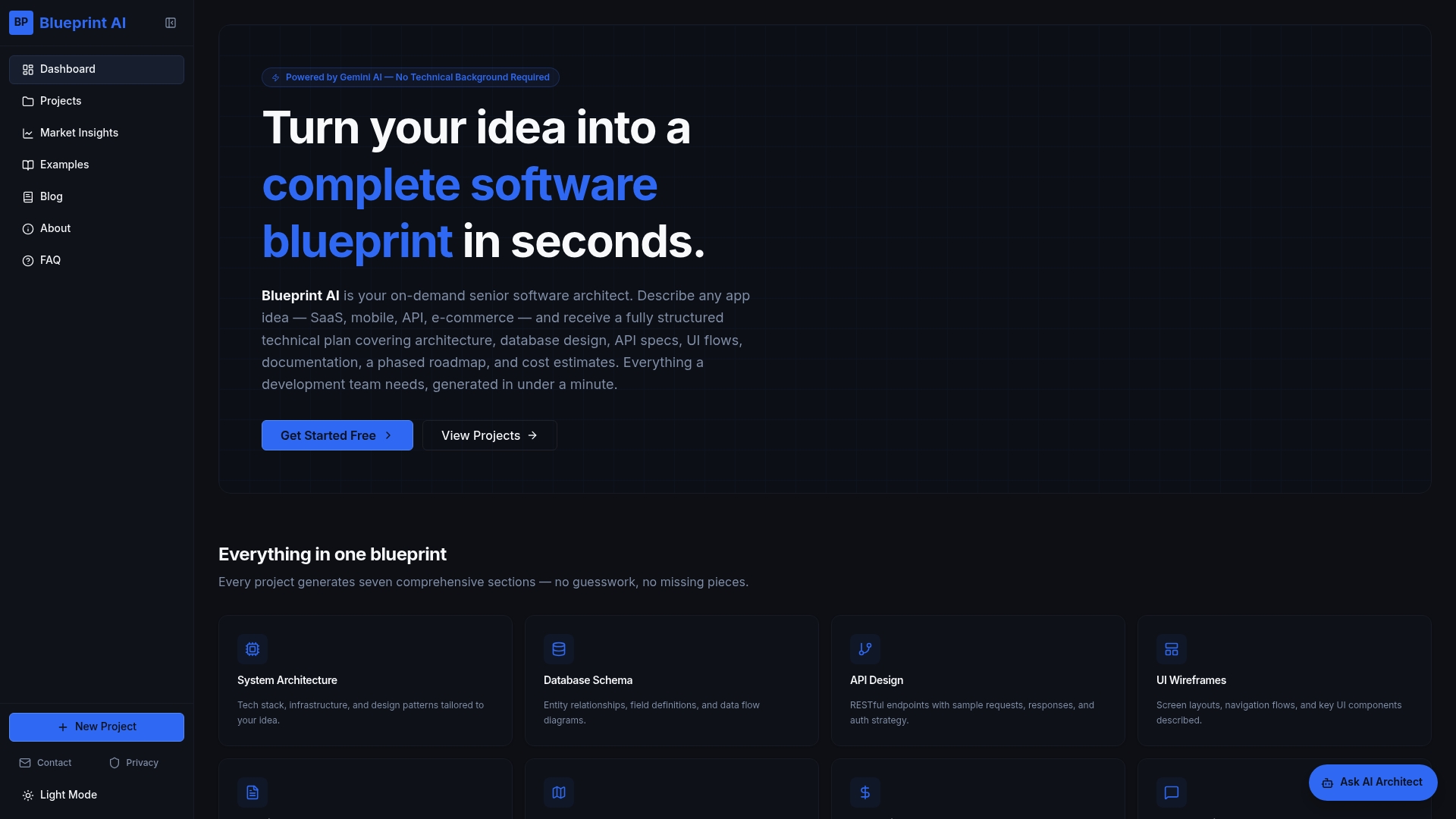
A well-documented technical blueprint is not just useful for developers. It is the kind of structured record that supports copyright claims, informs patent applications, and gives your legal team something concrete to work with. Explore real-world use cases to see how founders and product managers use Blueprintbot to align their technical plans with their IP goals from day one.
Key takeaways
Intellectual property software works because it combines legal protection frameworks with automated management systems, removing human error from the processes where a single mistake can permanently destroy IP rights.
| Point | Details |
|---|---|
| Two distinct categories | IP software covers legal protections (copyright, patents, trade secrets) and IPMS platforms managing the full portfolio lifecycle. |
| Layered protection is necessary | Relying on copyright alone is insufficient; software needs patents, trade secrets, and trademarks for full coverage. |
| Automation prevents rights loss | Verified data feeds from USPTO and EPO eliminate the manual errors that cause irrevocable deadline lapses. |
| AI is changing accessibility | Platforms like iPNOTE now make enterprise-grade IP management available to individual inventors and small teams. |
| Choose software to match your scope | Define your jurisdictions and IP types before evaluating any platform to avoid coverage gaps. |
FAQ
What is intellectual property software used for?
Intellectual property software is used to protect, track, and manage IP assets including patents, trademarks, copyrights, and trade secrets across multiple jurisdictions. It automates deadline monitoring, document management, and portfolio reporting to reduce the risk of rights loss through human error.
What is an IPMS platform?
An IPMS (intellectual property management system) is a specialised platform that manages the full lifecycle of IP assets, from initial filing through renewal, licensing, and expiry. Platforms like iPNOTE cover 190+ countries and integrate directly with official patent offices such as USPTO and EPO.
Can software be protected by both copyright and patent?
Yes. Copyright protects the source code as an expressive work automatically at creation, while patents can protect novel technical processes or functional innovations within the software. However, software patent eligibility is complex and shaped by legal precedents like Alice Corp. v. CLS Bank.
What happens if you miss an IP renewal deadline?
Missing a renewal deadline typically results in the lapse of patent or trademark rights, and in most jurisdictions those rights cannot be recovered after the grace period expires. Automated deadline tracking through IPMS platforms is the most reliable way to prevent this outcome.
Do individual inventors need IP management software?
Individual inventors with even a small number of active filings benefit from IP management tools because the consequences of a missed deadline or jurisdiction gap are the same regardless of portfolio size. Accessible platforms and free trials make professional-grade tools available without enterprise budgets.