How to align engineering and product teams quickly

The fastest way to align engineering and product teams is through three things: a shared operating rhythm, joint ownership of outcomes, and a single technical document everyone trusts. Without all three, you get the same cycle: product ships a roadmap, engineering discovers it two weeks later, trust erodes, repeat.
The Product Trio framework cuts through that cycle. One PM, one designer, one tech lead. Two hours blocked weekly. Discovery and decisions happen together in the same room, not in Slack threads where half the team never reads the context. Teams that involve engineering from day one reduce rework by catching misalignments before code is written.
Fast alignment essentials:
- Replace waterfall handoffs with continuous discovery and delivery pipelines
- Use a single shared backlog covering features, bugs, and technical debt
- Write OKRs that require collaboration between both functions to succeed
- Bring engineers into user research; bring PMs into technical design reviews
- Generate a shared technical blueprint before any sprint begins
Table of Contents
- How to align engineering and product teams quickly with proven frameworks
- How do you measure whether your teams are actually aligned?
- Blueprintbot gives your team a shared technical vision in seconds
- Key takeaways
How to align engineering and product teams quickly with proven frameworks
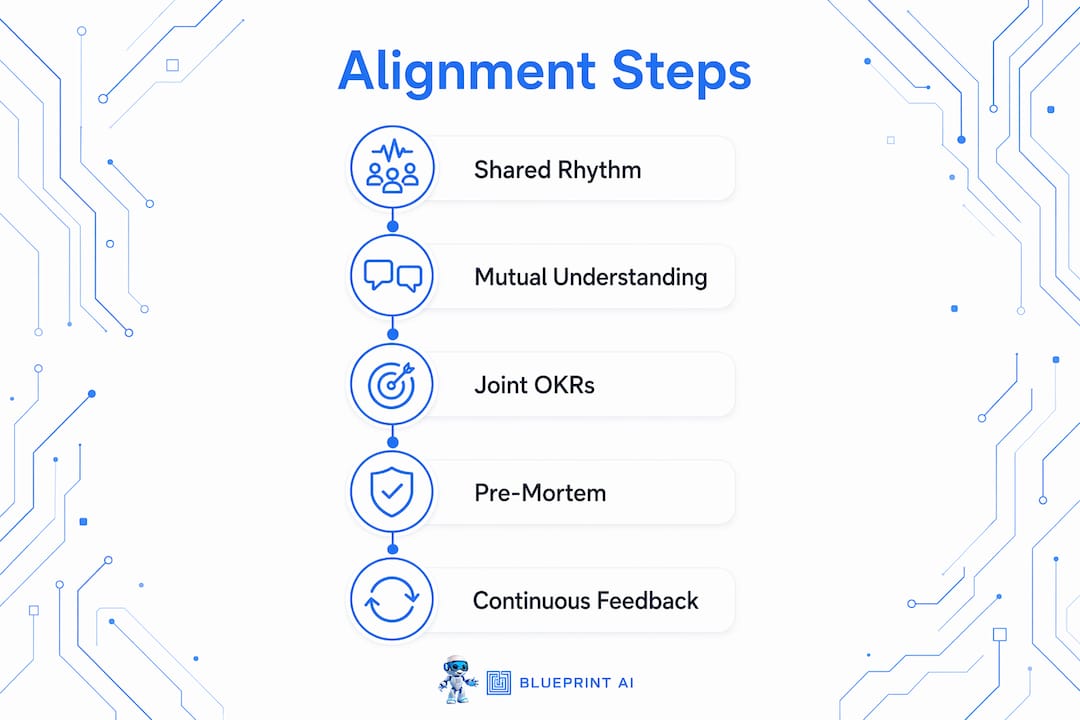
The Product Trio's weekly rhythm is not a status meeting. It is a synchronised operating practice: 50 minutes of discovery with raw notes, 10 minutes writing what the team learned, then one hour deciding together with committed ownership. The PM does not arrive with a finished opinion. The tech lead does not just say no. All three perspectives shape the direction before anything is locked.
Mutual understanding is the real gap. Product teams must grasp technical debt and architecture impact; engineering must understand user problems and business context. Cross-functional immersion, engineers sitting in on user research, PMs attending technical design reviews, closes that gap faster than any process document.

Shared OKRs are the structural fix for misaligned incentives. Write objectives that require both functions to win together, with product and engineering metrics jointly evaluated so neither team can claim success without the other. Pre-allocate a portion of engineering capacity to technical health as a fixed budget, not a quarterly negotiation.
Product managers lead through influence, not authority. Showing up with data-backed context and measurable outcomes earns credibility faster than any org chart title. A 30-minute weekly meeting with a conflicts-only agenda, cancelled when there are none, catches small misalignments before they harden into dysfunction.
Framework highlights:
- Product Trio: one product area, three roles, one weekly 2-hour block for focused collaboration
- Joint OKRs that integrate product metrics and engineering health considerations
- Continuous discovery pipelines replacing sequential handoffs
- Single prioritised backlog combining features, bugs, and technical debt
- Alignment sprints: quarterly planning sessions with joint executive sign-off on the outcome
Pro Tip: Run a pre-mortem before committing to any feature. Assume the project failed and ask why. This surfaces technical and product risks in 30 minutes that would otherwise surface six weeks into a sprint.
How do you measure whether your teams are actually aligned?
Alignment without measurement drifts. Track these leading indicators:
- Rework rate: percentage of stories reopened after "done" signals late-stage misalignment
- Time-to-market: how long from validated idea to shipped feature
- Cycle time: days from ticket creation to deployment, week over week
- Retrospective health: do engineers feel they have enough context to make good decisions?
- Shared OKR progress: are both product and engineering metrics moving together?
Qualitative signals matter too. A team where engineers can explain the business reason behind their current sprint, and PMs can articulate the top two technical constraints, is genuinely aligned. One where they cannot is not, regardless of what the velocity chart says.
Blueprintbot gives your team a shared technical vision in seconds
Misalignment often starts before the first sprint because there is no shared document everyone trusts. Blueprintbot solves that specific problem.
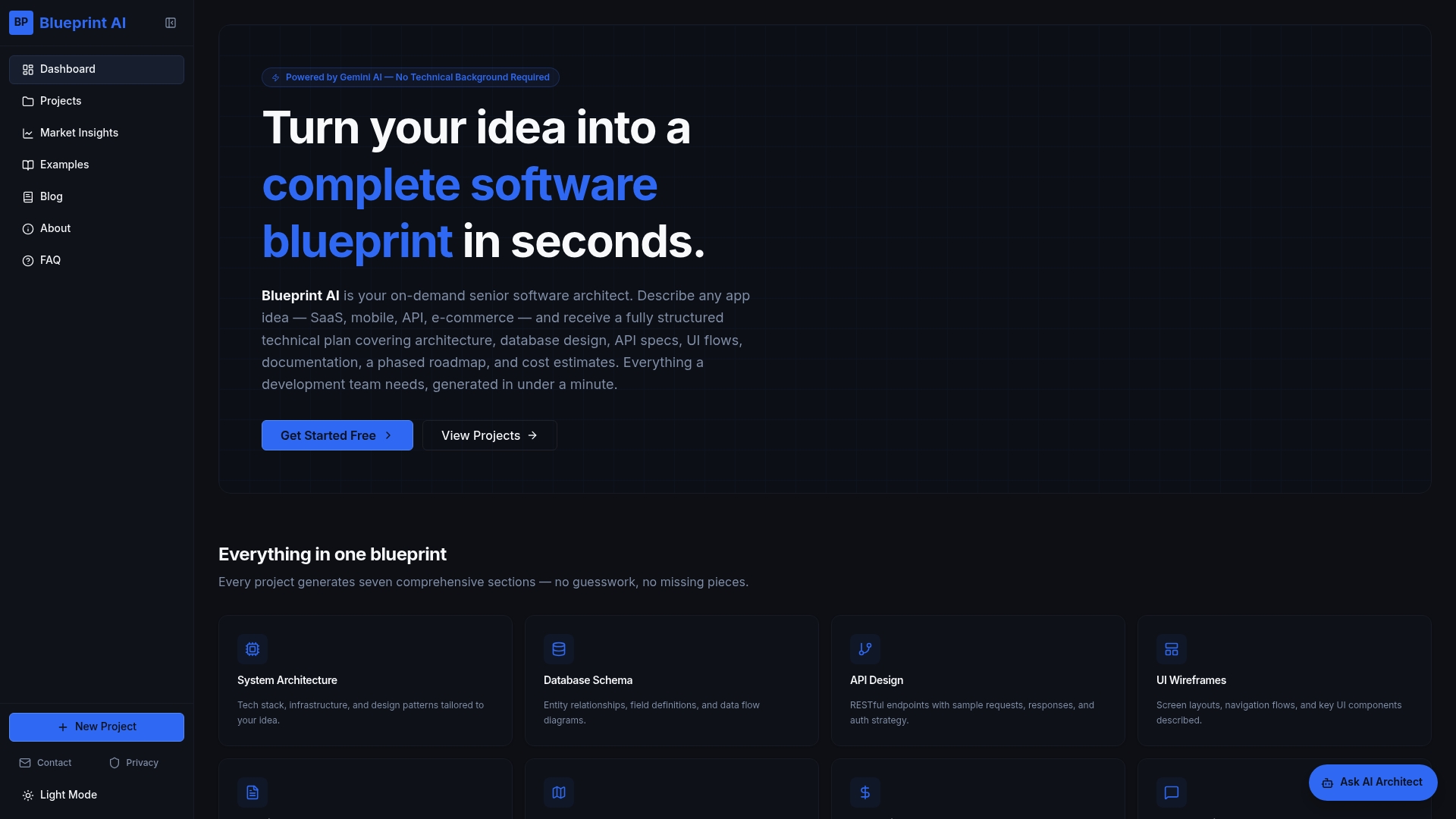
Paste your app idea into Blueprintbot and get a complete technical blueprint covering system architecture, database schemas, API designs, UI flows, and a deployment roadmap, all within seconds. Every stakeholder, technical or not, reads the same document. Ambiguity drops before a single line of code is written. The built-in AI chat assistant lets your team ask follow-up questions and refine the plan in real time, so the blueprint stays live rather than becoming shelf-ware. Browse worked blueprint examples to see exactly what your team would receive.
Key takeaways
Rapid alignment between engineering and product teams requires a shared operating rhythm, joint OKRs, and a single trusted technical document from the start.
| Point | Details |
|---|---|
| Product Trio rhythm | One PM, one designer, one tech lead meet for two hours weekly to discover and decide together. |
| Early engineering involvement | Teams that involve engineering from day one reduce rework by catching misalignments before code is written. |
| Joint OKRs | Write objectives requiring both product and engineering to succeed; neither team wins alone. |
| Fixed budget for technical health allocation | Pre-commit a portion of engineering capacity to technical health as a fixed budget every quarter. |
| Blueprintbot | Generates a complete shared technical blueprint in seconds, giving every stakeholder the same starting document. |