Why app architecture affects funding: a founder's guide

App architecture is defined as the structural blueprint that determines how your software components connect, scale, and fail. Investors treat it as a direct signal of execution risk. Why app architecture affects funding is not a theoretical question. It is a practical one that shapes valuations, deal terms, and whether a cheque gets written at all. Over 70% of Series A and B deals now include formal technical due diligence focused specifically on architecture. Founders who understand this dynamic enter funding rounds with a measurable advantage.
Why app architecture affects funding decisions
Investors do not fund code. They fund growth potential. Architecture is the evidence they use to judge whether that potential is real or fragile.
SponsoredCheck out today's featured offer →Weak architecture findings during Series A due diligence can reduce a startup's valuation by 15%–25%. That is not a rounding error. It is the difference between a term sheet that works and one that does not. When an investor's technical team finds that your app requires a full rewrite before it can handle 10x user growth, they reprice the deal to account for that risk.
Architecture signals three things to an investor: whether your team thinks ahead, whether the product can grow without breaking, and whether the engineering culture is disciplined. A well-structured system tells a story of foresight. A tangled one tells a story of shortcuts. Sophisticated investors read both fluently.

The architecture influence on startup funding runs deeper than most founders expect. It affects not just valuation but also deal structure, milestone requirements, and how much control a founder retains post-investment.
How do investors evaluate app architecture during due diligence?
Investors and their technical advisors look for specific, verifiable signals. They are not reading your code line by line. They are checking whether your architecture can survive success.
The most common areas of scrutiny include:
- Scalability evidence. Investors seek load testing results, architecture diagrams, and observability tools like Datadog, Grafana, or New Relic. These tools show that your system behaves predictably under pressure.
- Multi-tenancy and data isolation. SaaS products must demonstrate that customer data is properly separated. Weak isolation is a compliance risk and a liability.
- Single points of failure. Monolithic databases without replication or key-man dependencies on one engineer are red flags that trigger deeper scrutiny and valuation adjustments.
- Architectural Decision Records (ADRs). These are written logs of why specific technical choices were made. Their absence signals poor engineering discipline.
- Infrastructure cost alignment. Investors expect gross margins of 60%–75% for software businesses. If your infrastructure costs scale faster than revenue, that margin story breaks down.
Architecture that scales horizontally and isolates failures by design earns higher investor confidence than systems built with bolt-on fixes after the fact.
Pro Tip: Before any funding conversation, run a load test at 10x your current peak traffic and document the results. Bring that report to due diligence. It answers the scalability question before it is asked.
Does UX and product design influence investor confidence?
Product design is not separate from the architecture story. It is the part investors can see without reading a single line of documentation.
A fintech startup that made strategic UX improvements saw a 35% increase in conversion rates and secured $1M in additional funding within six months. That result was not accidental. Investors interpreted the UX improvement as evidence of product discipline and market understanding. The design told them the team knew its users.
The financial case for design goes further. Design-driven companies outperform the S&P 500 by 219% over a ten-year period. Investors who understand this treat design quality as a financial execution signal, not an aesthetic preference.
Mobile performance compounds the effect. Every one-second delay in app load time reduces conversions by up to 11%. Slow apps signal poor engineering to investors who know what that number means. A five-second load time is not a UX problem. It is a valuation problem.
Retention is the metric that ties design to long-term value. A 5% improvement in user retention can increase profitability by up to 95%. Investors price retention into their growth models. Better UX produces better retention, which produces a better multiple. Understanding how design impacts business outcomes helps founders frame this connection clearly during investor conversations.
What is technical debt and how does it affect your valuation?
Technical debt is the accumulated cost of taking shortcuts in code or architecture. Decision debt is its less-discussed cousin: the cost of never writing down why those shortcuts were taken.
Both types of debt affect funding outcomes, but in different ways. Technical debt is visible during code review. Decision debt surfaces when an investor's technical team asks why a particular database was chosen, or why the system was built as a monolith, and no one can answer. Missing ADRs signal poor engineering discipline and increase due diligence costs. Longer audits mean higher fees and more investor anxiety.
Startups built on low-code or no-code platforms face a specific version of this problem. Investors anticipate a "refactoring tax." They expect that up to 80% of new funding should go toward growth, not toward rebuilding a fragile MVP stack. When architecture makes that impossible, the valuation drops to compensate.
The good news is that controlled debt is not automatically disqualifying. A documented approach to technical debt with clear scale triggers and remediation plans shifts investor perception from "this is a risk" to "this is a managed trade-off." That shift is worth real money in a negotiation.
Common technical debt red flags investors watch for:
- No database replication or backup strategy
- Hardcoded credentials or environment-specific configurations
- No automated testing or CI/CD pipeline
- Undocumented third-party dependencies
- Architecture that cannot add a new feature without touching core logic
Pro Tip: Write a one-page technical debt register before your funding round. List each known issue, its business impact, and your plan to address it at a defined revenue or user threshold. Investors respect founders who see problems clearly.
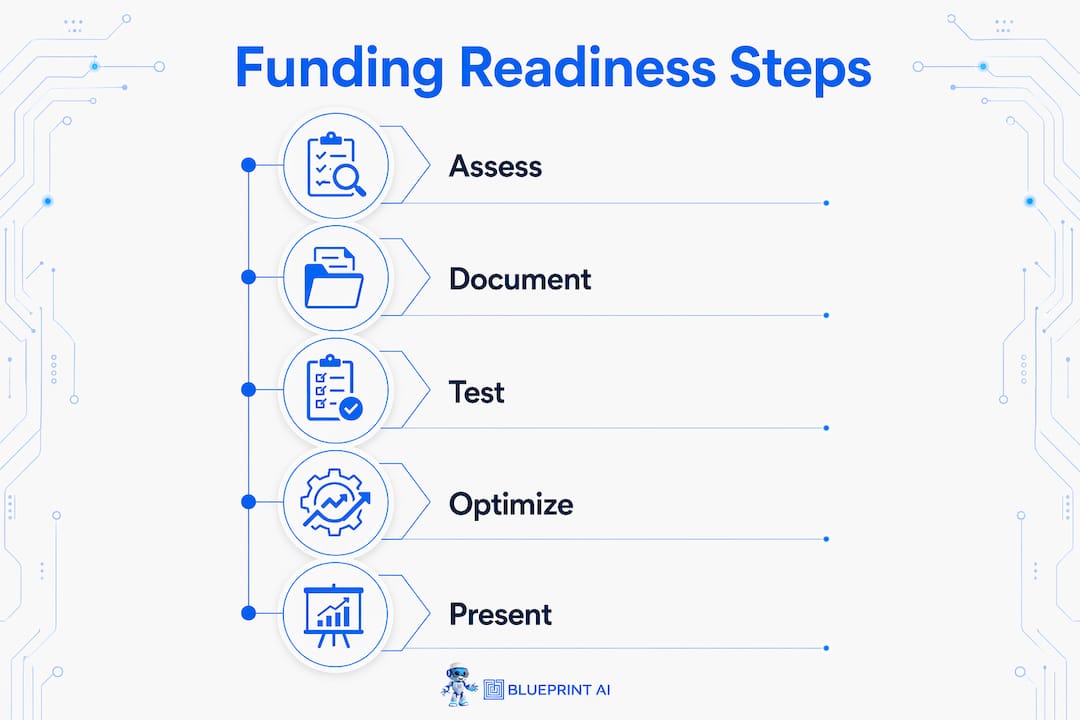
Practical steps to prepare your architecture for a funding round
Preparation is the variable that separates founders who close rounds from those who lose valuation in due diligence. The steps below address the most common gaps investors find.
Write your ADRs now. Document every significant architectural decision made in the last 12 months. Include the context, the options considered, and the reason for the choice made. This takes a weekend and saves weeks of due diligence friction.
Run and document load tests. Use tools like Grafana or Datadog to capture system behaviour at 5x and 10x current load. Store the results in a format you can share with a technical reviewer.
Build a scaling roadmap. Investors want to see a coherent architecture evolution plan that outlines thresholds, planned changes, and cost implications. A roadmap reduces uncertainty. Reduced uncertainty raises valuation.
Map your infrastructure costs to revenue. Show that your cost-per-user decreases as volume grows. Sub-linear scaling is a strong signal of architectural efficiency.
Fix your most visible red flags first. Add database replication, remove hardcoded credentials, and set up basic monitoring before any technical reviewer arrives.
The table below compares two common approaches founders take when preparing for due diligence.
| Preparation approach | Investor perception | Typical valuation outcome |
|---|---|---|
| No documentation, verbal explanations only | High risk, low trust | Valuation discount of 15%–25% |
| ADRs, load tests, and scaling roadmap in place | Managed risk, high trust | Valuation at or above benchmark |
Early architecture decisions shape how investors read your entire technical story. Getting those decisions documented before a funding round is one of the highest-return activities a founder can do.
Pro Tip: Use Blueprintbot to generate a structured system architecture blueprint from your app idea. The output gives you a starting point for your ADRs and a clear diagram to share with technical reviewers.
Key takeaways
App architecture directly determines investor confidence, valuation, and deal terms, making it a fundraising asset that founders must manage with the same discipline as revenue metrics.
| Point | Details |
|---|---|
| Architecture affects valuation | Weak architecture findings can reduce startup valuation by 15%–25% during due diligence. |
| Due diligence is now standard | Over 70% of Series A and B deals include formal technical architecture reviews. |
| UX and design signal execution quality | Design-driven companies outperform market benchmarks; investors treat UX as a financial signal. |
| Documented debt beats undocumented debt | A written technical debt register with remediation plans shifts investor perception from risk to managed trade-off. |
| Preparation changes outcomes | ADRs, load tests, and a scaling roadmap are the three documents most likely to protect your valuation. |
Architecture is your fundraising story, not just your tech stack
Founders often treat architecture as a back-end concern, something to sort out after the cheque clears. That instinct is backwards. By the time a Series A investor's technical team arrives, your architecture is already telling a story. The question is whether you wrote that story or let it write itself.
The founders I have seen navigate due diligence well share one habit. They treat architecture documentation as a communication tool, not a compliance exercise. They know that an investor reading an ADR is not looking for perfection. They are looking for evidence that the team makes deliberate decisions and owns the consequences. That evidence is worth more than a clean codebase with no paper trail.
The most overlooked signal in a funding round is the architecture evolution roadmap. Founders who can say "at 50,000 users we will migrate to a distributed queue, and here is what that costs" are telling investors that growth is planned, not hoped for. That specificity commands a premium.
The founders who lose valuation in due diligence are rarely the ones with bad architecture. They are the ones with good architecture and no way to prove it.
— Rishi
How Blueprintbot helps founders prepare for technical due diligence
Blueprintbot generates complete software blueprints from your app idea in seconds, covering system architecture, database schemas, API designs, and development roadmaps. For founders preparing for a funding round, that output is a practical starting point for ADRs, scaling roadmaps, and investor-ready technical documentation.
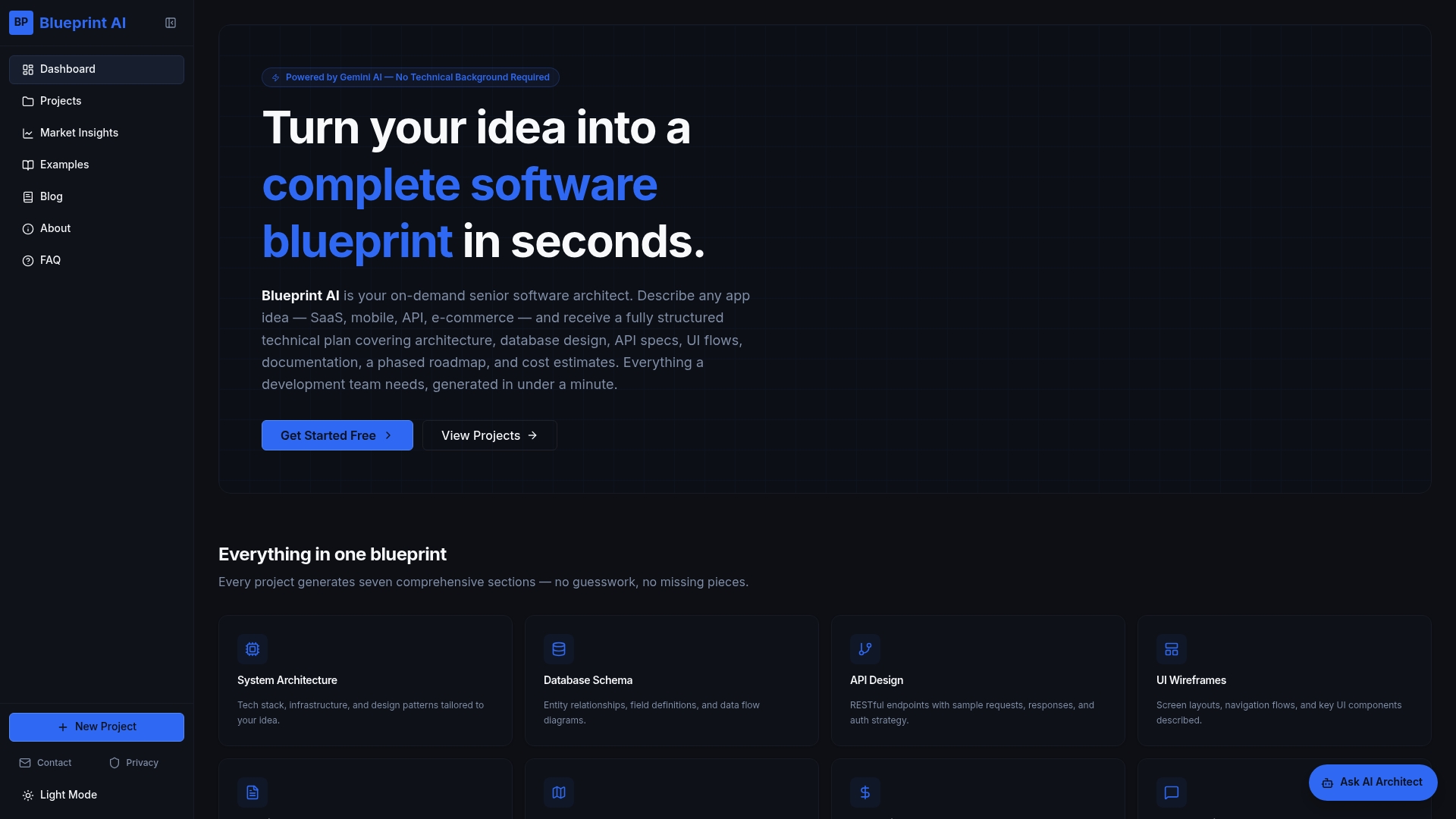
The worked blueprint examples on Blueprintbot show exactly how a structured architecture document reads to a technical reviewer. Founders can also use the free planning tools to model infrastructure costs and visualise scaling thresholds before due diligence begins. If you are heading into a Series A or B conversation, having a clear, documented architecture narrative is no longer optional. Blueprintbot makes building that narrative fast.
FAQ
Why does app architecture affect startup valuation?
Weak architecture signals execution risk to investors. Valuation reductions of 15%–25% are common when due diligence reveals systems that cannot scale without a full rewrite.
What do investors look for in technical due diligence?
Investors check for scalability evidence, ADRs, data isolation practices, observability tooling, and infrastructure cost alignment with revenue. Missing any of these increases audit time and lowers investor confidence.
What is an Architecture Decision Record?
An ADR is a short written document that captures why a specific technical choice was made, what alternatives were considered, and what trade-offs were accepted. Missing ADRs increase due diligence costs and signal poor engineering discipline to investors.
Does UX design affect funding outcomes?
Yes. Strategic UX improvements have directly contributed to funding increases, with one fintech startup securing $1M in additional funding after a 35% conversion rate improvement tied to design changes.
How can a founder reduce architecture risk before a funding round?
Write ADRs for all major decisions, run and document load tests at 10x current traffic, and build a scaling roadmap with defined cost thresholds. These three steps address the most common red flags investors find during technical due diligence.