What is a software licensing model? A 2026 guide

A software licensing model is the business framework a vendor uses to define pricing, access rights, and usage controls for software products. It is distinct from the software licence itself, which is the legal agreement between vendor and user. The licensing model governs how customers pay and what they can do; the licence agreement governs the terms of that arrangement. For business professionals managing procurement and compliance, understanding this distinction is the foundation of every sound software purchasing decision.
What is a software licensing model and what are the main types?
Primary licensing models in 2025–2026 include perpetual, subscription/SaaS, usage-based/metered, and concurrent/floating licences. Each model structures revenue, risk, and flexibility differently for both vendor and buyer.

Perpetual licences
A perpetual licence is a one-time purchase that grants indefinite use of a specific software version. Microsoft Office 2019 sold as a standalone product is a classic example. The buyer owns the right to use that version forever, but upgrades and support typically require separate maintenance agreements. This model suits organisations with stable, predictable software needs and limited internet connectivity, such as industrial or manufacturing environments.
Subscription and SaaS models
Subscription licences charge a recurring fee, monthly or annually, for time-bound access to software. Salesforce, Adobe Creative Cloud, and Microsoft 365 all operate on this model. Access ends when payment stops. The SaaS delivery method pairs naturally with subscription pricing because the vendor hosts the software and can enforce access centrally. This model dominates cloud-native software in 2026 because it lowers the upfront cost barrier for buyers and creates predictable recurring revenue for vendors.
Usage-based and metered models
Usage-based licensing charges customers based on actual consumption: API calls, data processed, active users, or transactions completed. AWS and Twilio are well-known examples. This model aligns cost directly with value received, which appeals to startups and high-growth companies whose usage fluctuates significantly month to month.
Concurrent and floating licences
A floating licence allows a defined number of simultaneous users to access software from a shared pool. Autodesk has historically used this model for engineering software. A company might purchase 10 concurrent seats for 50 employees, relying on the fact that not all 50 need access at the same time. This model reduces total licence cost but requires active monitoring to avoid overuse.
| Model | Payment pattern | Best use case | Flexibility |
|---|---|---|---|
| Perpetual | One-time upfront | Stable, offline environments | Low |
| Subscription/SaaS | Monthly or annual recurring | Cloud-native, growing teams | High |
| Usage-based/metered | Pay per consumption | Variable workloads, APIs | Very high |
| Concurrent/floating | Fixed pool, shared access | Large teams, infrequent use | Medium |
| Hybrid | Base fee plus variable usage | AI services, cloud platforms | High |
How do proprietary and open source licences affect your procurement?
Software licences fall into two categories: proprietary and open source. Each category carries distinct obligations that directly affect what your organisation can do with the software.
Proprietary licences restrict modification, redistribution, and reverse engineering. The vendor retains full ownership of the source code. Oracle Database and SAP ERP operate under proprietary licences. Buyers receive the right to use the software under defined conditions, nothing more.
Open source licences grant access to the source code and permit modification. They split further into two important sub-categories:
- Permissive licences (MIT, Apache 2.0): Allow modification and redistribution with minimal restrictions. You can incorporate MIT-licensed code into a commercial product without releasing your own source code.
- Copyleft licences (GPL, LGPL): Require that any derivative work also be distributed under the same open source terms. Copyleft licences like GPL can legally obligate your proprietary software to be open sourced if you integrate GPL components incorrectly. This is one of the most costly compliance errors a development team can make.
For procurement teams, the practical implication is clear. Before approving any software that incorporates open source components, your legal team must audit licence compatibility. A single misidentified GPL dependency in a commercial product can trigger an obligation to release your entire codebase publicly. Blueprintbot's open source architecture examples illustrate how teams structure projects to manage this risk from the start.
What compliance challenges come with managing software licences?
Maintenance, support, and update terms in licence agreements frequently create hidden compliance costs. A perpetual licence may appear inexpensive until you discover that security patches require an active maintenance contract billed annually. Legal review must confirm exactly what is and is not included before you sign.
Subscription model complexity introduces shadow IT and unused seats, forcing organisations to use automated monitoring tools for cost and compliance. An employee who signs up for a SaaS tool on a personal credit card creates a shadow IT instance that sits outside your compliance perimeter entirely. Tools like Flexera One and Snow Software exist specifically to detect and manage this problem.
Licence enforcement methods such as device fingerprinting and online entitlement checks affect deployment feasibility in secure environments. If your organisation operates air-gapped systems, a licence that requires continuous internet-based entitlement verification will simply not work. Procurement teams must verify enforcement technology before committing to a vendor.
- Audit your current licences before renewing. Identify unused seats and eliminate them to reduce cost.
- Require a licence summary document from every vendor that lists update, support, and maintenance terms explicitly.
- Verify enforcement method compatibility with your IT infrastructure, particularly for secure or offline deployments.
- Engage legal review for any agreement involving open source components or redistribution rights.
- Implement IT asset management software to track SaaS usage continuously and flag anomalies.
Pro Tip: When negotiating SaaS agreements, ask vendors to include a licence true-up clause that allows you to adjust seat counts quarterly rather than annually. This prevents overpaying for seats you no longer need.
Understanding software development costs alongside licence fees gives procurement teams a complete picture of total cost of ownership.
How do hybrid licensing models create new monetisation opportunities?
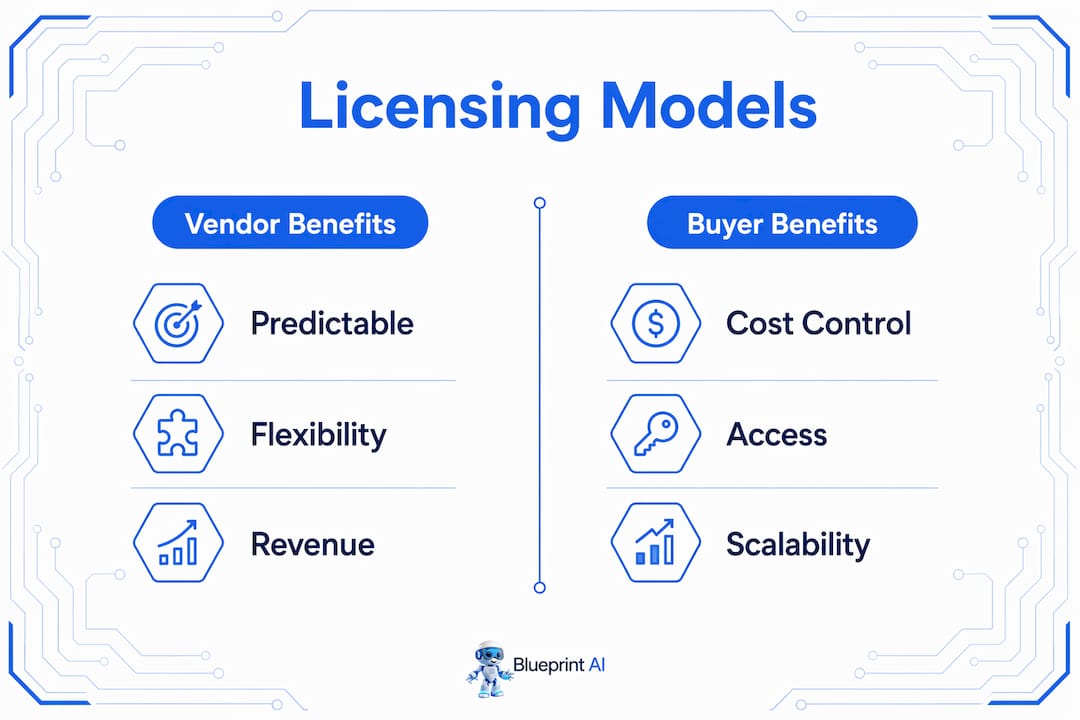
Hybrid licensing models combine a base subscription fee with variable usage-based billing, generating both predictable revenue and scalable growth potential. This structure has become the dominant model among SaaS vendors offering AI and cloud-native services in 2026.
OpenAI's API pricing is a clear example. Customers pay for a base access tier and then incur additional charges per token processed. This means a small startup and a large enterprise can both use the same product, with costs scaling naturally to match their actual consumption. The vendor captures revenue from both segments without building separate product tiers.
Pro Tip: If you are evaluating a hybrid-priced tool, model three usage scenarios: minimum expected use, average expected use, and peak use. The difference between scenarios often reveals whether the model is genuinely cost-effective for your organisation.
| Model structure | Vendor benefit | Buyer benefit | Risk |
|---|---|---|---|
| Base subscription only | Predictable revenue | Budget certainty | Vendor locks in price |
| Usage-based only | Scales with growth | Pay for what you use | Unpredictable costs |
| Hybrid (base + usage) | Predictable floor plus upside | Flexibility with cost floor | Complexity in forecasting |
SaaS revenue leakage is a direct consequence of poorly structured hybrid agreements where usage overages go untracked. Buyers and vendors both benefit from clear metering and transparent reporting built into the contract from day one.
Licensing is a strategic product experience element influencing revenue, customer satisfaction, and market fit. Vendors who choose an inappropriate model risk higher churn. Buyers who misread a model risk budget overruns and compliance failures.
What factors should you prioritise when selecting a licensing model?
Choosing the right licensing model requires matching the software's deployment type and your organisation's usage patterns to the model's cost structure. There is no universally correct answer, but there is a clear decision framework.
- Deployment type: Cloud-hosted software pairs naturally with subscription or hybrid models. On-premises software often suits perpetual or floating licences better. Verify that the licence model matches how the software is actually delivered.
- Usage patterns: If your team uses software daily and intensively, a subscription or perpetual model offers cost predictability. If usage is sporadic or project-based, usage-based or floating licences reduce waste.
- Scalability: Fast-growing companies benefit from subscription and hybrid models that scale without renegotiation. Stable organisations may prefer perpetual licences to avoid recurring cost increases.
- Total cost of ownership: Calculate the full three-year cost of each model, including maintenance fees, renewal escalations, and overage charges. A perpetual licence that looks cheap upfront may cost more over three years than a subscription once you add mandatory support contracts.
- Legal compatibility: Confirm that the licence terms align with your intended use, particularly if you plan to integrate the software into a product you redistribute. Engage legal counsel for any agreement involving redistribution rights or open source components.
Blueprintbot's SaaS pricing calculator helps you model subscription costs across different tiers before you commit to a vendor. Pairing that with the cloud hosting cost calculator gives you a full infrastructure cost picture alongside your licence spend.
Key takeaways
A software licensing model is the vendor's framework for pricing and access control, and choosing the wrong one creates both financial and legal risk.
| Point | Details |
|---|---|
| Model types differ fundamentally | Perpetual, subscription, usage-based, and hybrid models each carry distinct cost and compliance implications. |
| Open source carries legal risk | Copyleft licences like GPL can obligate proprietary code to be open sourced if integrated incorrectly. |
| Hidden costs are common | Maintenance, support, and update terms must be confirmed in writing before signing any licence agreement. |
| Hybrid models are growing | Base subscription plus usage billing is now the dominant structure for AI and cloud-native SaaS products. |
| Total cost of ownership matters | Calculate three-year costs including overages, renewals, and maintenance before comparing models. |
Licensing is a product strategy decision, not just a pricing choice
I have reviewed hundreds of software procurement decisions, and the most expensive mistakes rarely come from choosing the wrong vendor. They come from misreading the licensing model. A team signs a perpetual licence expecting stability, then discovers the vendor has moved all new features to a subscription tier. Another team adopts a usage-based API without modelling peak load, then receives an invoice three times the expected amount.
The deeper issue is that most organisations treat licensing as a procurement formality rather than a strategic decision. Modern licensing has evolved far beyond serial keys into platforms that enable real-time entitlement management, feature control, and usage metering. That complexity demands collaboration between legal, IT, and finance from the start, not after the contract is signed.
What I find most underappreciated is the relationship between licensing model and product experience. A usage-based model signals to customers that the vendor is confident in the value delivered per unit of consumption. A perpetual model signals stability and long-term commitment. The model you choose, or accept, shapes how your team perceives the software's value every single month. That perception affects adoption, renewal decisions, and ultimately whether the tool delivers a return on investment.
My advice: treat the licensing model review as seriously as you treat the security review. Both carry long-term consequences that are difficult and expensive to reverse.
— Rishi
Plan your software procurement with Blueprintbot
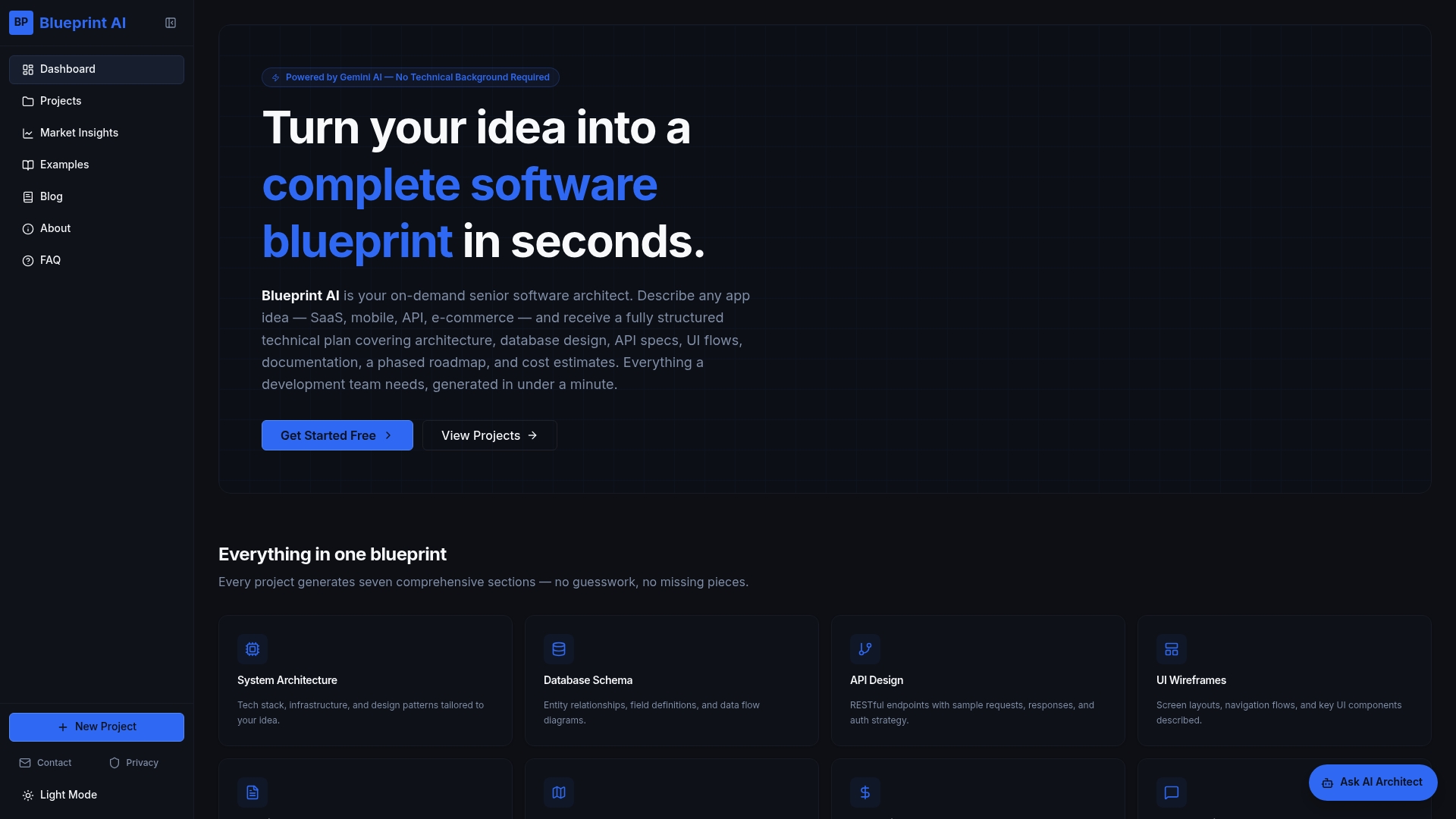
Blueprintbot generates complete software blueprints from your app idea in seconds, covering architecture, API design, cost estimates, and development roadmaps. When you are evaluating a new software product or planning to build one, understanding the licensing and cost structure from day one prevents the budget surprises that derail projects. Explore the software blueprint examples to see how structured planning documents map out licensing considerations, feature scope, and deployment requirements before a single line of code is written. You can also access Blueprintbot's full suite of free planning tools to model costs, prioritise features, and align your team around a clear technical and commercial plan.
FAQ
What is the difference between a software licence and a licensing model?
A software licence is the legal agreement that defines a user's rights to use a specific product. A software licensing model is the broader business framework that determines how the vendor prices, delivers, and controls access to that product across all customers.
Which software licensing model is best for a small business?
Subscription models are generally the best fit for small businesses because they require no large upfront payment and scale with headcount. SaaS products like Microsoft 365 or Google Workspace are designed specifically for this use case.
What is a perpetual software licence?
A perpetual licence grants the buyer the right to use a specific software version indefinitely after a one-time payment. Updates and support are typically sold separately through annual maintenance agreements.
How do copyleft licences affect commercial software development?
Copyleft licences such as GPL can require any derivative software to be released under the same open source terms. Commercial development teams must audit all open source dependencies to avoid unintentionally triggering this obligation.
What is shadow IT in the context of software licensing?
Shadow IT refers to software adopted by employees outside of official IT procurement processes. In subscription licensing, it creates compliance gaps and unused paid seats that inflate costs without delivering organisational value.